Before visitors understand your message, they feel your brand. And typography is one of the first signals shaping that feeling.
In 2026, font choice isn't a decorative decision — it's a strategic one.
Typography Is Brand Language
Fonts quietly communicate personality.
Without realizing it, users associate typography with traits like:
- credibility
- modernity
- warmth
- authority
- accessibility
A mismatch between your brand and your font doesn't scream "wrong" — it simply creates hesitation. And hesitation is often where users leave.
That's why typography should be chosen with the same care as your logo or brand voice.
Serif vs. Sans-Serif: The Psychology Behind the Choice
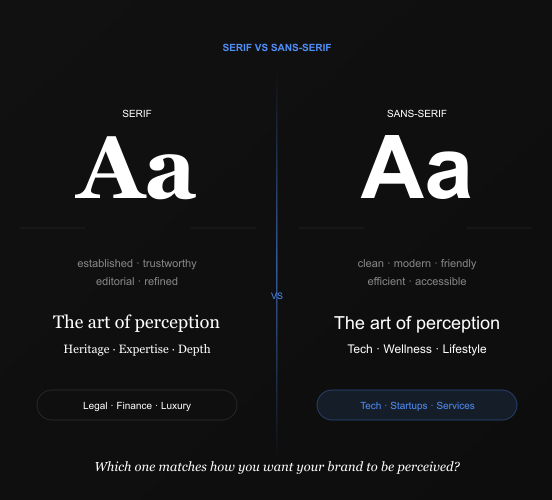
There's no universal "better" option — only better context.
Serif fonts often feel:
- established
- trustworthy
- editorial
- refined
They work well for brands that want to signal heritage, expertise, or depth.
Sans-serif fonts tend to feel:
- clean
- modern
- friendly
- efficient
They're popular among tech, wellness, lifestyle, and service brands because they reduce visual friction — especially on screens.
The key question:
Which one matches how you want your brand to be perceived?
Readability Across Devices Is Non-Negotiable
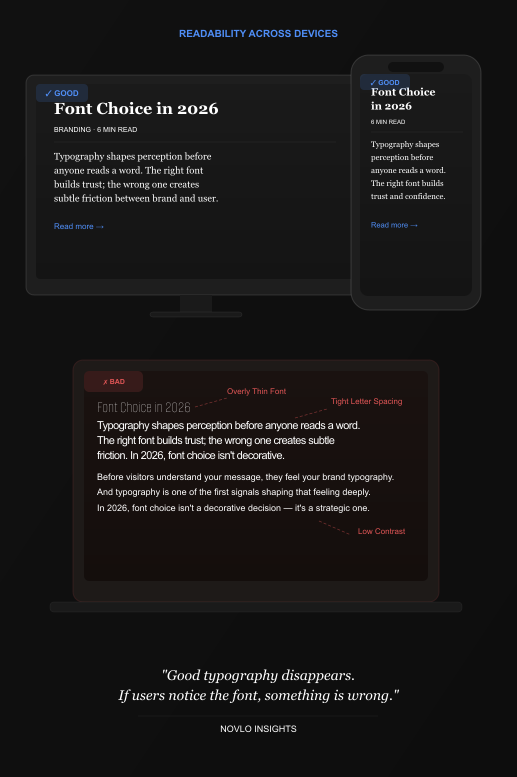
In 2026, your website is viewed everywhere: phones, tablets, laptops, ultra-wide monitors — sometimes all in the same day.
A font that looks beautiful on desktop but strains the eyes on mobile silently damages user experience.
Common issues include:
- overly thin weights
- tight letter spacing
- poor contrast
- fonts designed for print, not screens
Good typography disappears. If users notice the font because it's hard to read, something is wrong.
Pairing Fonts That Actually Work
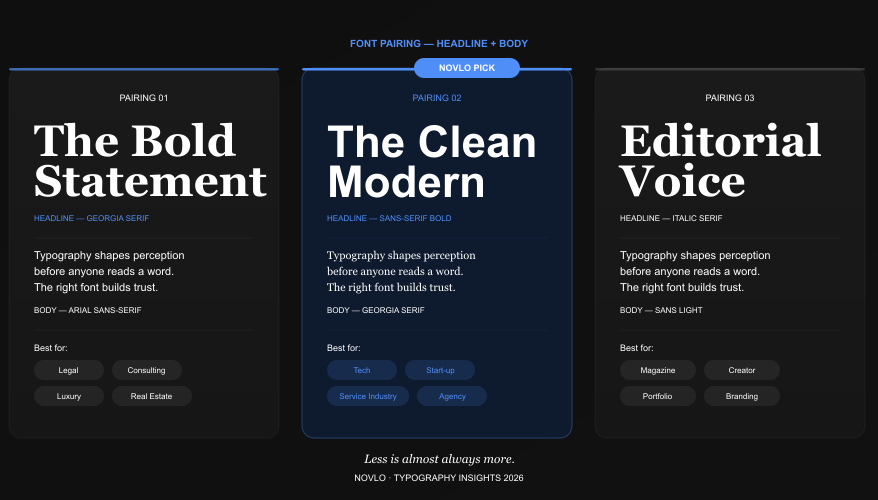
Using multiple fonts can add hierarchy and personality — or chaos.
A reliable pairing usually follows this structure:
- one font for headlines
- one font for body text
The contrast should feel intentional, not accidental. Too similar feels lazy; too different feels messy.
A good font pairing helps users:
- scan content faster
- understand structure intuitively
- feel visual consistency without boredom
Less is almost always more.
When (and How) to Break the Rules
Rules exist for clarity — not limitation.
Breaking typography conventions can work if:
- your brand already has a strong identity
- the choice is intentional, not decorative
- readability is never sacrificed
Some brands successfully use:
- oversized typography
- unconventional spacing
- expressive display fonts
But these choices only work when supported by strong strategy and restraint. Breaking rules without purpose feels like noise, not creativity.
Final Thoughts
Typography is often invisible — until it isn't.
The right font doesn't just look good. It reduces friction, builds trust, and reinforces your brand before a single word is read.
In a crowded digital space, details like typography are no longer optional. They are part of how your business communicates professionalism, clarity, and confidence.